
Sirach — Chapter 4 — Hebrew–Greek comparison
Care for the Needy and Fidelity to Wisdom
| Hebrew–English · Literal-Smooth | Greek–English · Literal-Smooth | Classification & Notes |
|---|---|---|
Hebrew 4:1 · translated My son, do not mock a poor person's life, and do not grieve the soul of the poor and embittered. | Child, do not deprive the poor person of his livelihood, and do not keep needy eyes waiting. | Different · Hebrew 4:1 — Hebrew mocking and grieving replace Greek depriving and waiting eyes. Inherited Greek note4:1 Livelihood renders ζωή in the setting of support for the poor; the waiting eyes image is retained. |
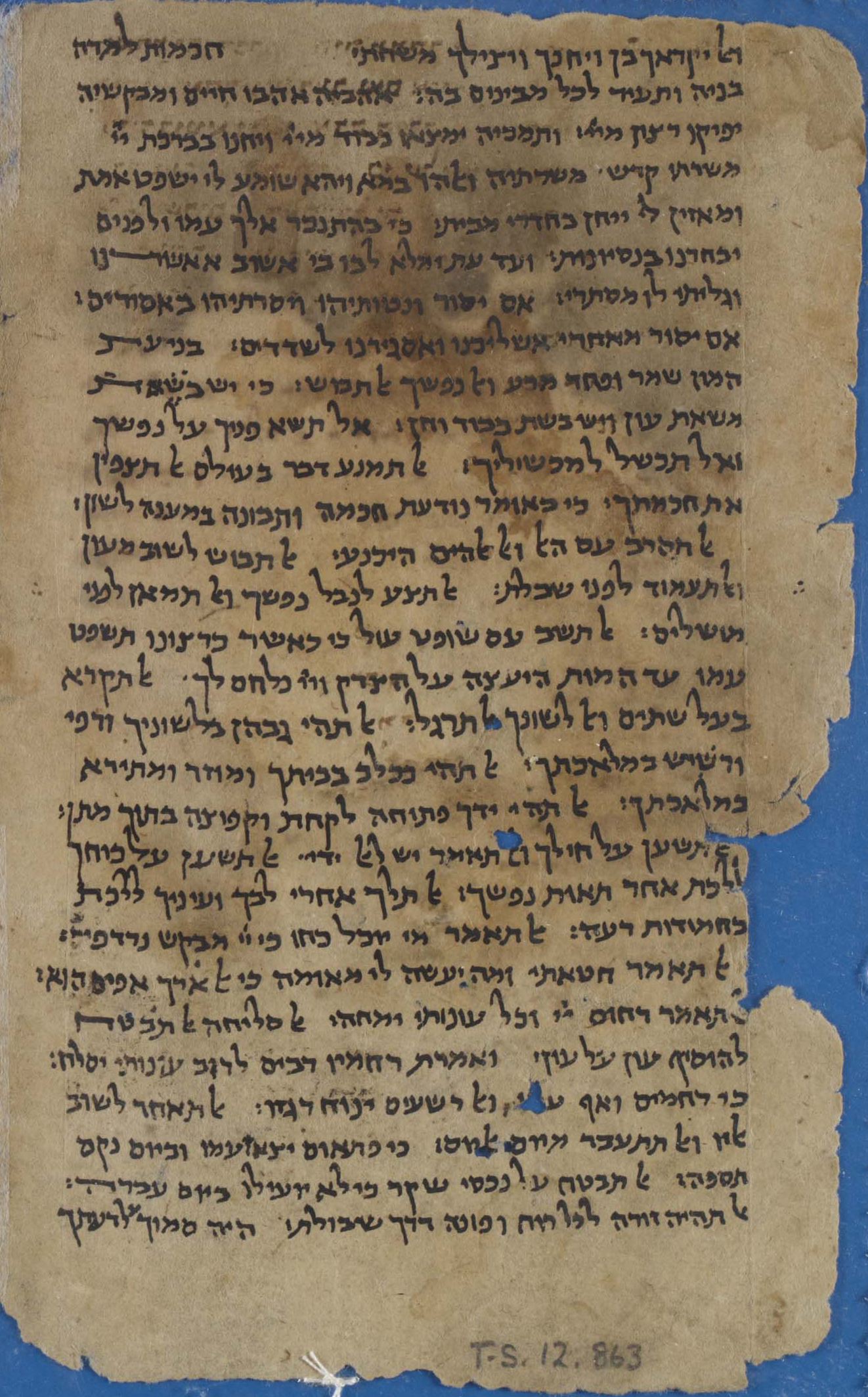
Hebrew 4:2 · translated Refresh a needy soul; do not blow it away, and do not turn away from one crushed in spirit. Hebrew witness A · I rectoר ֹוֶ וה נפש חסירה אל תפוח ואל תתעלם ִמ ְמּ ֻד ְכ ָדּ ֯ך נפש׃ | Do not grieve a hungry soul, and do not provoke a man in his helplessness. | Similar · Hebrew 4:2 — The difficult middle phrase is rendered literally and provisionally. |
Hebrew 4:3 · fragmentary Do not [aggravate] the lowly person's inward distress, and do not hurt the poor person's heart. | Do not add trouble to an embittered heart, and do not delay a gift to someone in need. | Different · Hebrew 4:3 — Hebrew repeats inward suffering instead of Greek delay of a gift. Classification assesses only surviving/readable wording, not lost portions. |
Hebrew 4:4 · translated Do not withhold a gift from your needy one, and do not despise a poor person's requests. | Do not reject an afflicted supplicant, and do not turn your face away from a poor person. | Similar · Hebrew 4:4 — The principal sense corresponds to the inherited Greek-English rendering. |
Hebrew 4:5 · translated And give him no occasion to curse you. | Do not turn your eye away from someone in need, and do not give anyone occasion to curse you. | Similar · Hebrew 4:5 — A lacks the Greek first clause about turning away one's eye. |
Hebrew 4:6 · translated One bitter in spirit cries out in his soul's pain, and his Rock hears the sound of his cry. | For if he curses you in the bitterness of his soul, his Maker will listen to his petition. | Similar · Hebrew 4:6 — Hebrew names God his Rock; Greek his Maker. Inherited Greek note4:6 The Creator’s hearing of the neglected person’s petition is explicit. |
Hebrew 4:7 · translated Make yourself beloved by the assembly, and bow your head to the city's ruler. | Make yourself welcome to the assembly, and bow your head to a person of high rank. | Similar · Hebrew 4:7 — The principal sense corresponds to the inherited Greek-English rendering. |
Hebrew 4:8 · translated Incline your ear to the poor person, and answer him peaceably and humbly. | Incline your ear to the poor person, and answer him peaceably with gentleness. | Same · Hebrew 4:8 — The principal sense corresponds to the inherited Greek-English rendering. |
Hebrew 4:9 · translated Save the oppressed from his oppressors, and do not let your spirit grow weary in righteous judgment. | Rescue the one being wronged from the hand of the wrongdoer, and do not lose courage when you judge. | Same · Hebrew 4:9 — The principal sense corresponds to the inherited Greek-English rendering. |
Hebrew 4:10 · fragmentary Be like a father to orphans and in place of a husband to widows; God will call you son, show you favor, and rescue you from the pit. Hebrew witness A · I recto; I versoהיה כאב ליתומים ותמור בעל ]] [[ לאלמנות׃ ואל יקראך בן ויחנך ויצילך משחת· Additional folio transcriptions: 2 | Be like a father to orphans and in place of a husband to their mother. Then you will be like a son of the Most High, and He will love you more than your mother does. | Different · Hebrew 4:10 — Hebrew calls him son and promises deliverance; Greek compares him to a son and adds maternal love. Classification assesses only surviving/readable wording, not lost portions. Inherited Greek note4:10 Both family comparisons are retained. Like a son translates ὡς υἱός rather than asserting an identity without the comparison. |
Hebrew 4:11 · fragmentary Wisdom has taught her children and bears witness to all who understand her. | Wisdom has raised her sons high and takes hold of those who seek her. | Different · Hebrew 4:11 — Hebrew teaching and testimony differ from Greek raising and taking hold. Classification assesses only surviving/readable wording, not lost portions. |
Hebrew 4:12 · translated Those who love her love life, and those who seek her obtain favor from YHWH. | The one who loves her loves life, and those who rise early to seek her will be filled with gladness. | Similar · Hebrew 4:12 — Hebrew divine favor corresponds to Greek gladness. |
Hebrew 4:13 · translated Those who hold her fast find honor from YHWH and dwell in YHWH's blessing. | The one who holds her fast will inherit glory; wherever he enters, the Lord blesses. | Similar · Hebrew 4:13 — The principal sense corresponds to the inherited Greek-English rendering. Inherited Greek note4:13 The unexpressed subject of enters is provisionally the person holding wisdom, not wisdom herself. |
Hebrew 4:14 · fragmentary Her ministers are ministers of holiness; [the remaining Hebrew words are corrupt]. | Those who serve her will minister to the Holy One, and the Lord loves those who love her. | Not classified · Hebrew 4:14 — Second clause ואלהו במא ויהא cannot be translated securely; Greek must not be inserted as Hebrew. |
Hebrew 4:15 · translated Whoever listens to me will judge truthfully, and whoever attends to me will lodge in my inner chambers. | The one who obeys her will judge nations, and the one who attends to her will dwell confidently. | Different · Hebrew 4:15 — Hebrew Wisdom speaks in the first person; Greek judges nations and dwells securely. |
Hebrew 4:16 · blocked Hebrew witness A (index attribution only) · I versoAdditional folio transcriptions: 2 | If he trusts, he will possess her as an inheritance, and his descendants will hold her in possession. | Not classified · Hebrew 4:16 — The index attributes this verse to A, but both the transcription and the inspected manuscript photograph, A I verso lines 4–6, pass from 4:15 directly to 4:17. No corresponding extra clause is identifiable in the adjacent verses. The index claim is unconfirmed; no Hebrew wording invented. |
Hebrew 4:17 · translated For I will walk with him as a stranger, and at first [he will test him] with trials. | For at first she will walk with him on winding paths; she will bring fear and dread upon him and torment him with her discipline until she trusts his soul, and she will test him by her ordinances. | Different · Hebrew 4:17 — The Hebrew shifts person in its second clause; bracketed rendering preserves the difficulty. Greek supplies a longer account of testing. Inherited Greek note4:17 Wisdom is subject of trusts here, in contrast to the person’s trust in 4:16. The severe testing language is retained. |
Hebrew 4:18 · translated Until his heart is filled with me, I will return, make him happy, and reveal my hidden things to him. | Then she will return straight to him, gladden him, and reveal her hidden things to him. | Similar · Hebrew 4:18 — Hebrew retains Wisdom's first-person speech. |
Hebrew 4:19 · translated If he turns aside, I will turn him back and discipline him with bonds; if he turns away from me, I will cast him away and deliver him to plunderers. Hebrew witness A · I versoאם יסור ונטותיהו ויסרתיהו באסורים׃ אם יסור מאחרי אשליכנו ואסגירנו לשדדים׃ | If he goes astray, she will abandon him and hand him over into the grip of his downfall. | Different · Hebrew 4:19 — Hebrew adds corrective discipline before abandonment. Inherited Greek note4:19 The source’s hands of his downfall is represented as its grip. |
Hebrew 4:20 · translated My son, watch the time of tumult and fear evil, but do not be ashamed concerning yourself. | Watch for the right time and guard against evil, and do not be ashamed concerning your soul. | Similar · Hebrew 4:20 — Hebrew time of tumult is more specific than Greek time. |
Hebrew 4:21 · translated For there is shame that carries sin, and there is shame that is honor and favor. | For there is shame that brings sin, and there is shame that is glory and favor. | Same · Hebrew 4:21 — The principal sense corresponds to the inherited Greek-English rendering. Inherited Greek note4:21 The contrast concerns different kinds of shame; neither half is omitted. |
Hebrew 4:22 · translated Do not show partiality against yourself, and do not stumble over those who make you stumble. | Do not show partiality against your own soul, and do not defer to someone to your own downfall. | Similar · Hebrew 4:22 — The principal sense corresponds to the inherited Greek-English rendering. Inherited Greek note4:22 Show partiality translates the idiom receive a face. |
Hebrew 4:23 · translated Never withhold a word; do not conceal your wisdom. | Do not withhold a word at a time of need, | Different · Hebrew 4:23 — A adds the wisdom clause; Greek specifies a time of need. |
Hebrew 4:24 · translated For wisdom becomes known in speech, and understanding in the tongue's answer. | for wisdom will be known through speech, and instruction through the tongue’s utterance. | Same · Hebrew 4:24 — The principal sense corresponds to the inherited Greek-English rendering. |
Hebrew 4:25 · translated Do not resist God, but submit to God. | Do not speak against the truth, and be ashamed of your lack of instruction. | Different · Hebrew 4:25 — Greek instead forbids speaking against truth and calls for shame over lack of instruction. |
Hebrew 4:26 · translated Do not be ashamed to turn from iniquity, and do not stand against a torrent. | Do not be ashamed to confess your sins, and do not force your way against a river’s current. | Similar · Hebrew 4:26 — Hebrew repentance corresponds to Greek confession. |
Hebrew 4:27 · translated Do not lay yourself down before a fool, and do not refuse before rulers. Do not sit with an unjust judge, for according to his will you will be judged with him. Hebrew witness A · I versoאל תצע לנבל נפשך ואל תמאן לפני מושלים׃ אל תשב עם שופט עול כי כאשר כרצונו תשפט עמו | Do not lay yourself down beneath a foolish person, and do not show partiality to someone powerful. | Different · Hebrew 4:27 — The ruler clause differs; A also adds the unjust-judge saying. Inherited Greek note4:27 The submission image is kept rather than changed into a prohibition of friendship. |
Hebrew 4:28 · translated Strive for righteousness until death, and YHWH will fight for you. Do not be called double-tongued, and do not slander with your tongue. Hebrew witness A · I versoעד המות היעצה על הצדק וייי נלחם לך· אל תקרא בעל שתים ואל לשונך אל תרגל׃ | Struggle for the truth until death, and the Lord God will fight for you. | Different · Hebrew 4:28 — A adds the double-tongue saying also found at 5:14. |
Hebrew 4:29 · translated Do not be boastful with your tongue but slack and feeble in your work. | Do not be rash with your tongue and sluggish and slack in your deeds. | Similar · Hebrew 4:29 — The principal sense corresponds to the inherited Greek-English rendering. |
Hebrew 4:30 · translated Do not be like a dog in your house, acting strangely and fearfully in your work. | Do not be like a lion in your house, indulging vain fancies among your household slaves. | Different · Hebrew 4:30 — A has dog rather than lion, and work rather than household slaves; latter Hebrew phrase is difficult. C II recto instead reads כאריה בביתך, “like a lion in your house,” agreeing with the Greek animal; https://bensira.org/transcriptions/C/C_II_Recto.pdf. Inherited Greek note4:30 The rare φαντασιοκοπῶν is rendered with the sense documented in LSJ’s directly read entry, which specifically cites this verse. The context may imply suspicious household behavior, but that narrower inference is not substituted for the verb. “Household slaves” renders οἰκέται. [LSJ-PHANTASIO] |
Hebrew 4:31 · translated Do not let your hand be open to receive and closed when giving. | Do not let your hand be stretched out to receive, but drawn back when repaying. | Same · Hebrew 4:31 — The principal sense corresponds to the inherited Greek-English rendering. Inherited Greek note4:31 Verified early Christian parallel: Didache 4 repeats the image of hands extended to receive but withdrawn from giving, amid instructions on generosity. The parallel was read in Riddle’s English translation; direct literary dependence and identical Greek wording are not claimed. [DIDACHE4] |
Source and numbering
Hebrew English is newly translated from the manuscript-specific transcriptions in The Book of Ben Sira portal. Each translated unit identifies its selected witness and folio. This is a selected-witness working edition, not an exhaustive collation of every manuscript or a reconstruction of lost Hebrew. Brackets and fragmentary status identify uncertainty; no Greek text has been back-translated to fill Hebrew gaps.
The Greek-source English and its notes are inherited from the existing Sirach edition. The comparison categories are provisional editorial assessments against that English; this update is not a fresh verification of every Greek reading or its apparatus.
Working translation preserved from the recovered manuscript of 8 September 2026. Declared source: Septuaginta, Rahlfs–Hanhart, 2006, Deutsche Bibelgesellschaft, publisher’s Greek main text. Independent linguistic and critical-apparatus review remains outstanding. Source-access and reception claims in the inherited notes have not been freshly revalidated. Chapter and section headings are editorial.
The translator’s prologue is separate from the 51 chapters. Its eight source units map to publisher labels 1, 1a–1g; main-text 1:1 maps to 1h. Source 5:15 includes material often numbered 6:1, so chapter 6 begins at 6:2. Source label gaps are preserved; no text is invented.